
中文 | English
Actor Training

Mandarin Enunciation

Improve the clarity and accuracy of your spoken Mandarin through a practical study of consonants, vowels, tones and speech intonation.

This class is designed for individuals aiming to improve their Mandarin pronunciation. It focuses on fundamental aspects of Mandarin phonetics, including correct articulation of consonants, vowels and tones.

Participants will also learn standard spoken Mandarin, including techniques for modulating tones during speech. The class incorporates practice sessions with diverse text genres to refine participants’ speech intonation.

Details

Dates
19, 20, 22 and 23 October 2026
4 days
Time
7pm–10pm
Venue
NYT Studio
28 Aliwal Street, #02-09
Aliwal Arts Centre
Singapore 199918
Instructor
Mia Chee
Course fee
$390
Conducted in
Mandarin

Application

Application is now open.

Limited spots available.

Application deadline:
30 September 2026

Apply now

Instructor

Mia Chee

Mia Chee

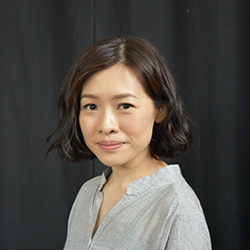
Mia is an actor, producer and theatre educator, and co-founder and Company Director of Nine Years Theatre (NYT). She started learning to perform in standard Mandarin at the age of nine when she joined Rediffusion’s children and youth radio drama group.

Since then, she has performed in school through her teenage years and eventually graduated with a B.A. in Theatre Studies and Chinese Language from the National University of Singapore.

As a continuation of her background in radio work from a young age, she worked as a part-time DJ at Y.E.S. FM93.3 from 1997 to 2014. Since 2015, she has taught NYT’s Mandarin Enunciation classes and led other Mandarin speech training classes.

She was a founding and core member of the NYT Ensemble throughout its journey from 2014 to 2021, and led the ensemble in vocal and speech training.

What participants say

“I feel immensely more confident after the class and eager to continue learning.”

— Euginia Tan

“我对发音的方法有了更深的了解,也学会了很多发声技巧,期待以后可以运用在工作中。老师会根据每位学生的程度进行指导,让我受益良多。”

— 郑锦安

“I am now more conscious of my pronunciation and what to focus on during storytelling and dramatisation for young audiences. The teacher was encouraging and clearly explained the areas in which I could improve.”

— Tan Shun Ru

“课程让我理解并意识到了一些长久以来的读音疑惑和发音习惯,也让我重新找回了对华语的热忱,收获不少。”

— 杨凯威

“I am now more aware of my speaking habits and have a fuller understanding of Mandarin and how to approach it.”

— 何嘉祈

“Teacher Mia gave us additional practice in the areas we found difficult. I appreciated having her guidance and corrections, because when practising alone, we may not know whether we are doing it correctly.”

— Eugene Low

Frequently asked question

What is the difference between “Mandarin Enunciation” and “Mandarin Speech Work for Performance”?

The Mandarin Enunciation class is designed for individuals aiming to improve their Mandarin pronunciation and speaking clarity. It focuses on fundamental aspects of Mandarin phonetics, teaching participants to articulate consonants, vowels and tones correctly.

The class covers standard spoken Mandarin and techniques for modulating tones during speech. Participants practise speech intonation using various text genres, with the primary goal of achieving clear and accurate Mandarin pronunciation suitable for everyday communication and as a foundation for performing in Mandarin.

Mandarin Speech Work for Performance is geared towards individuals interested in enhancing their Mandarin expression skills in performance contexts. Beyond pronunciation, the course explores stresses, pauses, links, intonation, voice modulation and emotional expression.

Participants learn systematic techniques for interpreting and delivering texts effectively, helping them become more expressive and engaging performers. This course is ideal for those looking to refine their Mandarin delivery for theatrical performance, public speaking or any situation requiring compelling language expression.

In summary: Mandarin Enunciation emphasises foundational pronunciation and clarity for everyday communication and performing in Mandarin. Mandarin Speech Work for Performance focuses on advanced language-expression techniques for performance contexts.